
How to Help Your Child Learn Without Doing the Homework for Them

Why It’s Important to Help — But Not Do — Your Child’s Homework For Them
Supporting your child with homework is more than completing assignments for them. When you help the process — not the answers — you:
-Build their confidence and independence.
-Strengthen problem-solving skills instead of memorization alone.
-Encourage responsibility and accountability for their own learning.
-Maintain positive parent-child learning relationships, avoiding stress or frustration.
Helping them learn how to think is far more valuable than doing tasks for them.
Strategies to Support Homework Without Taking Control
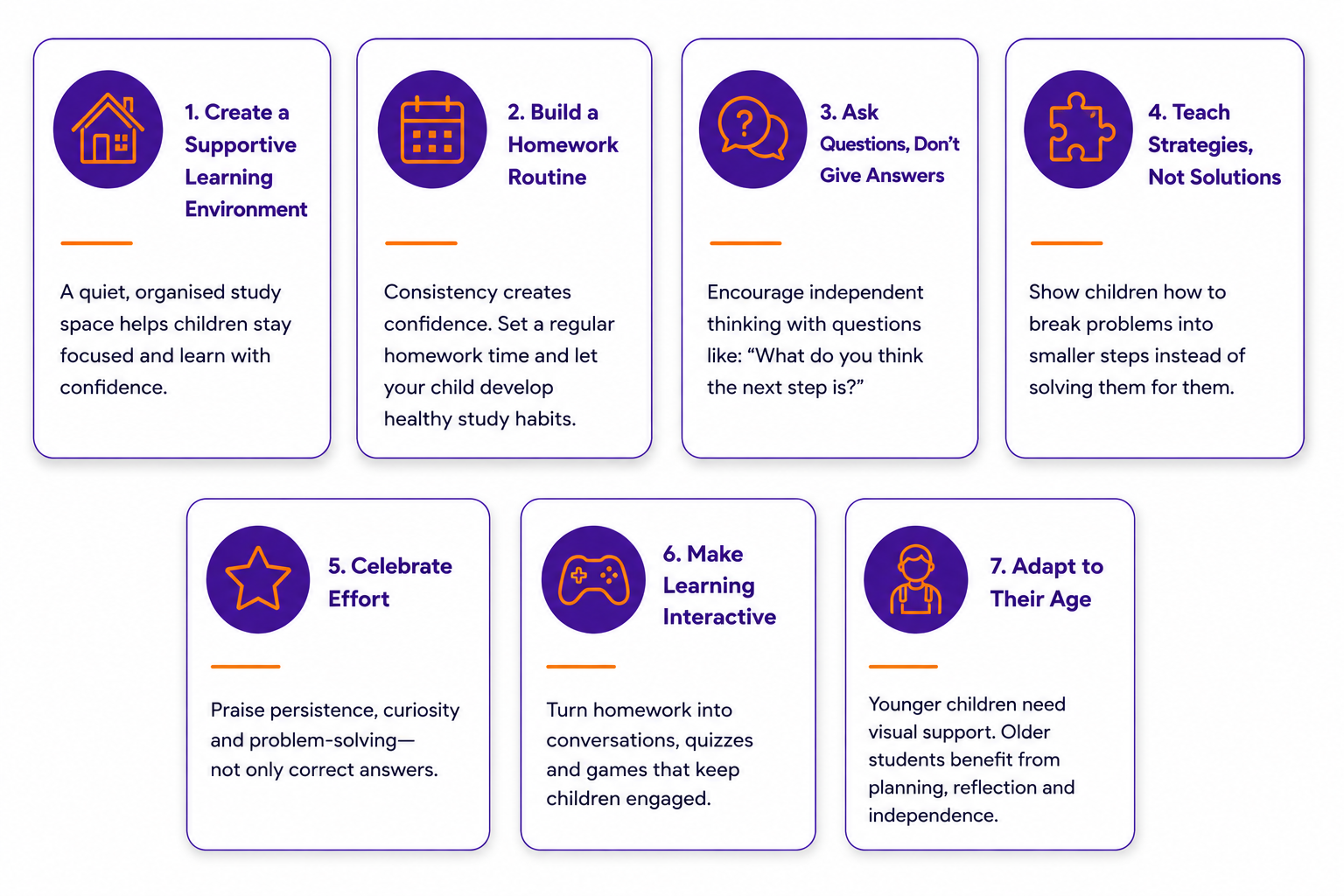
1. Create a Supportive Learning Environment
Your child learns best when they feel safe and uninterrupted:
-Set up a quiet, tidy study area with good lighting.
-Keep supplies (pencils, paper, calculator, dictionary) within reach.
-Remove distractions like phones, TVs, or games during homework time.
2. Establish a Homework Routine
Consistent habits help children manage time and expectations:
-Choose a regular homework time each day (e.g., after play/rest, before dinner).
-Start with easier tasks to build momentum, then transition to harder ones.
-Use a visual schedule or checklist to mark progress and tasks complete.
3. Ask Guiding Questions Instead of Giving Answers
Instead of solving problems for them, help them think through solutions:
-“What part of the question do you understand?”
-“What strategy could help you solve this?”
-“Can you break this into smaller steps?”
-“What do you think comes next?”
These questions help children become active learners.
4. Teach Study and Problem-Solving Techniques
-Equip your child with skills they can apply independently:
-Summarizing: Have them put instructions or ideas in their own words.
-Chunking: Break large tasks into smaller, manageable pieces.
-Self-checking: Teach them to reread instructions before answering.
Use “What I Know / What I Need to Learn” lists to organize thoughts.
5. Encourage Effort and Persistence
Praise process — not just correct results:
-“I really like how you tried different strategies.”
-“It’s great you kept working even when it was tricky.”
-Avoid only praising correct answers; focus on thinking and effort.